
How to Transition a Kids' Closet Between Seasons
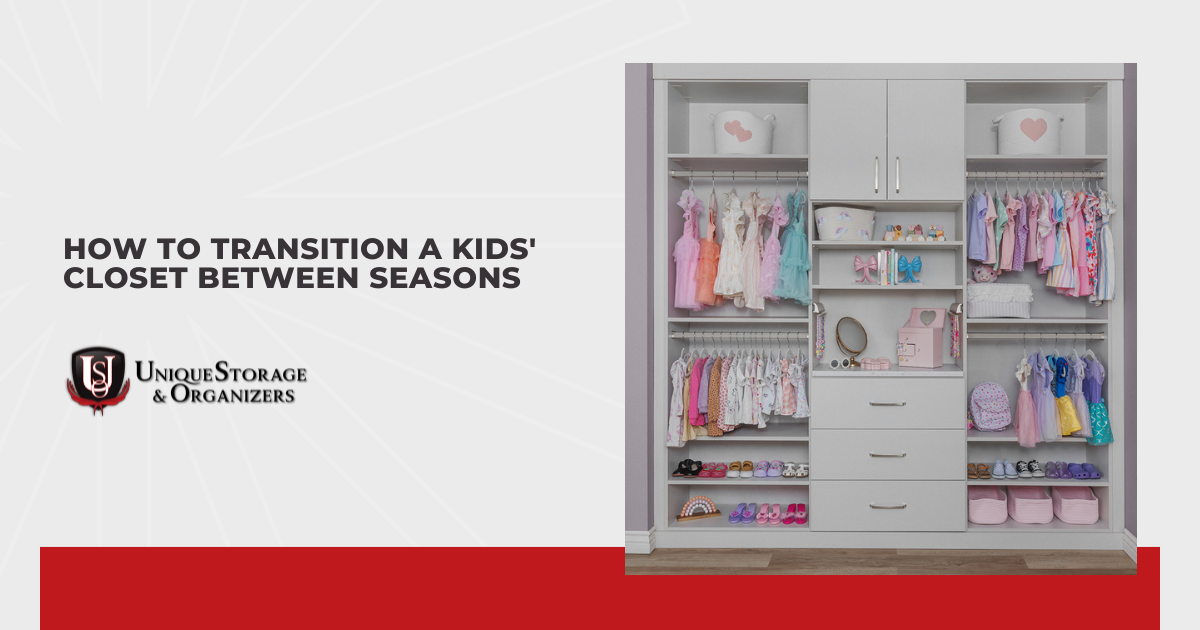
Kids' closets rarely stay organized for long once the weather starts to shift. One month you're pulling out swimsuits and sandals, and the next you're digging for winter coats buried under summer clothes. This shuffle happens several times a year, and without a plan, it can turn into a cluttered mess fast. After helping families rework their storage systems season after season, I've noticed the closets that stay organized longest are the ones with a clear routine, not just a quick clean-out.
The routine starts with knowing what to keep, what to store, and what to pass along before the new season's clothes even come out. A good transition also helps you spot outgrown items, refresh your storage setup, and set your kids up for smoother mornings once everything's in place. Some steps work best done on your own, while others give your kids a chance to pitch in and build good habits of their own. By the time you finish, your kids' closets will feel ready for whatever the new season brings.
These seven tips will help you transition kids' closets between seasons:
- Sort and purge outgrown clothes first
- Rotate out-of-season items to storage
- Reassess hanging and shelf space needs
- Organize by category and frequency of use
- Create a dedicated zone for seasonal accessories
- Involve your kids in the process
- Plan for next season's growth
Each section ahead walks through one part of the process in more detail.
Sort and Purge Outgrown Clothes First
Before you swap in a new season's wardrobe, take everything out of the closet and check it against your kids' current sizes. Kids grow fast, and a pair of pants that fit fine last season might be inches too short now. Pull anything that no longer fits, has visible wear, or just doesn't get worn anymore, and set it in a separate pile.
Sort that pile into categories: donate, hand down, or toss. Clothes in good condition can go to a sibling, a friend, or a local donation center, while anything stained or torn is better off in the trash. This step clears out clutter before you add a single new item, so you're not stacking new clothes on top of old ones that don't belong there anymore.
It's also worth checking accessories and shoes during this pass, since kids outgrow those just as quickly as clothes. A pair of snow boots that fit in December might be too tight by the time cold weather rolls around again next year. Taking care of this now means the rest of the transition goes faster, since you're only working with items that actually still fit.
Rotate Out-of-Season Items to Storage
Once you've cleared out what no longer fits, the next step is finding a home for everything the current season doesn't need yet. Clear bins with lids work well for this, since you can see what's inside without opening every container. Vacuum-sealed bags are another good option for bulkier items like winter coats or snow pants, since they save space and keep things protected from dust.
Store these bins somewhere accessible but out of the main closet space, like a top shelf, under-bed storage, or a nearby closet. The goal is to free up room in kids' closets for the clothes they'll actually wear over the next few months. Label each bin clearly by season and size, since kids' sizes change fast enough that last year's labels might not apply anymore.
Rotating stored items back in at the start of each season also gives you a natural checkpoint to repeat the sorting process from the first tip. This keeps the closet from becoming a dumping ground for clothes that technically still fit but rarely get worn. A little organization now saves you from a bigger mess later, especially once the next seasonal swap rolls around.
Reassess Hanging and Shelf Space Needs
Seasonal wardrobes don't take up the same amount of space. Winter clothes tend to be bulkier, with coats, sweaters, and layered outfits taking up more room on the rod, while summer clothes are lighter and often fold into drawers or shelves instead of hanging. Take a look at how the current setup in kids' closets matches what's coming into rotation.
If you're moving from summer to winter, you might need to lower the hanging rod so coats and sweaters don't drag on the floor, or add a second rod for extra hanging space. Moving from winter to summer often frees up rod space but increases the need for shelf or drawer storage, since shorts, tank tops, and swimsuits fold more easily than they hang. Small adjustments like these make a real difference in how much the closet can actually hold.
It also helps to think about your kids' height and reach. I've seen plenty of closets where the rod height made sense a year ago but no longer matches how tall a child has grown since. Lowering rods or shelves as needed means your kids can grab their own clothes without asking for help every morning, which makes the whole space more functional for everyone.
Organize by Category and Frequency of Use
Once the closet has the right amount of hanging and shelf space, the next step is deciding where each type of clothing goes. Group items by category, like school outfits, activewear, and weekend clothes, so your kids know exactly where to look each morning. This kind of grouping cuts down on the time spent digging through mixed piles just to find a matching pair of pants.
Frequency of use matters just as much as category. Clothes your kids wear every week, like school uniforms or everyday shirts, should sit at eye level or within easy reach. Items worn less often, like dress clothes for special occasions, can go on a higher shelf or further back in the closet without getting in the way of the daily routine.
This setup also makes it easier to spot gaps in the wardrobe once the season changes. If the activewear section looks thin compared to school clothes, you'll notice it right away instead of realizing it the morning your kid needs a specific outfit. The system stays useful season after season, even as the actual clothes inside it change.
Create a Dedicated Zone for Seasonal Accessories
Clothes usually get the most attention during a seasonal swap, but accessories tend to slip through the cracks. In my experience, hats, gloves, swimsuits, and boots are the first things to go missing on a busy morning, not clothes. Kids' closets work better when these items have a spot of their own instead of getting mixed in with everything else.
Small bins, baskets, or hooks near the closet entrance work well for this. Keep gloves and hats together in one bin during colder months, and swap that same bin for swimsuits and sun hats once summer rolls around. Hooks are especially useful for bulkier items like backpacks or rain boots that don't fit neatly into a drawer or bin.
Keeping these accessories visible cuts down on the scramble to find a missing glove or swim goggles. When everything has a designated spot, your kids can grab what they need without pulling apart the rest of the closet. It pays off most on the mornings you're already running behind.
Involve Your Kids in the Process
A seasonal closet swap goes a lot smoother when your kids are part of it instead of just watching from the sidelines. Even young kids can help sort clothes into piles, decide which toys or accessories they've outgrown, or pick out which bin gets which label. Giving them a role in the process makes the transition feel less like a chore you're doing to them and more like something you're doing together.
Older kids can take on more responsibility, like folding clothes for storage or choosing which items to donate. Letting them have a say in how their own space gets organized tends to make them more likely to keep it that way afterward. Kids' closets stay tidier longer when the person using them had a hand in setting them up.
Younger kids might not grasp every step, but simple tasks like matching socks or handing over folded shirts still give them a sense of participation. Letting them make small decisions, like which bin goes where, adds a bit of ownership to the process without slowing things down too much. Over time, these small responsibilities build habits that carry into how they treat their space year-round.
Plan for Next Season's Growth
Kids grow fast enough that the closet setup you just finished might not fit their needs by the next swap. Instead of treating this transition as a one-time fix, build in some flexibility for the growth that's coming. Adjustable rods, shelves that can move up or down, and stackable bins all make it easier to adapt the space without starting from scratch each season.
Leave a little extra room in drawers and on shelves rather than filling every inch during this pass. I always tell parents that a closet packed to capacity right now leaves no room for the extra shirts or shoes their kids will need in just a few months. Loose bins or baskets with open space work better than fixed dividers, since they can hold more as wardrobes grow.
It also helps to think ahead about sizing when storing off-season clothes. If a coat fit perfectly this year but your kid is due for a growth spurt, it might be worth passing it along now instead of storing it for next winter. The effort you put in now means the next seasonal swap takes less time and effort than this one did.
Conclusion
Every season brings a new set of clothes, and a new chance to keep kids' closets working the way your family actually needs them to. The habits you build now, from sorting outgrown items to leaving room for growth, carry over long after the current season ends. Your kids will notice the difference too, especially once they're used to a system that makes sense to them. A closet that adapts with your family stays useful far longer than one that gets reorganized from scratch every time.
