
Kids’ Closet Features & Accessories That Reduce Morning Chaos
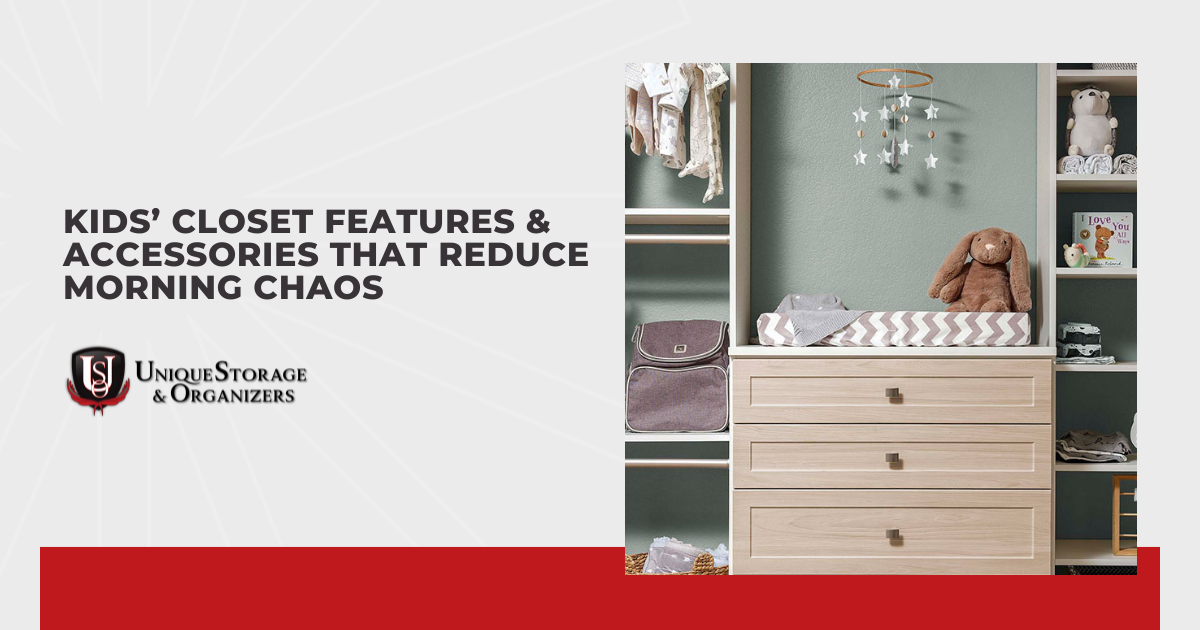
The morning rush usually starts with one simple question: Where is everything? If your kids’ closet isn’t set up for real life, getting dressed can turn into a scavenger hunt that eats up your time and patience. Shoes disappear, outfits feel overwhelming, and small delays quickly snowball into stress. What should be a quick step in your routine often becomes the biggest bottleneck of the morning.
What reshapes that experience isn’t more storage, but smarter details. As a closet designer and installer, I base kids’ closet layouts on how children actually move, choose clothes, and grab what they need when mornings feel rushed in your home. Those decisions directly influence how smoothly your routine flows. When the closet supports those habits, mornings feel calmer, faster, and far more predictable for you and your kids.
I’ve narrowed down the kids’ closet features and accessories that make mornings easier for both kids and parents, each focusing on reducing chaos, saving time, and helping your household start the day on a calmer note.
- Low-hanging closet rods
- Open cubby storage
- Drawer systems
- Labeled storage bins
- Pull-out hampers
- Adjustable shelving
- Kid-level shoe storage
- Hooks for backpacks and jackets
- Outfit-planning zones
Keep reading as we move through each kids’ closet feature, starting with the ones that tend to matter most during the morning rush.
Low-Hanging Closet Rods
Low-hanging closet rods remove one of the biggest obstacles your kids face in the morning. When clothes are placed at adult height, kids have to ask for help before the day even starts. That small delay often sets the tone for everything that follows and slows your entire routine.
Placing rods at kid height allows your children to see their options and make choices on their own. Shirts, dresses, and school clothes stay visible instead of buried behind taller items or mixed storage. This reduces back-and-forth and helps your mornings move with less friction.
I design these rods with growth and routine in mind, so they support independence in your home without constant adjustments. When your kids can reach their own clothes, they’re more likely to stay engaged in the routine from start to finish. That independence alone can remove a surprising amount of morning tension for you.
Open Cubby Storage
Closets slow kids down when everything looks the same. Stacks of folded clothes, closed drawers, and hanging rows blur together, especially early in the morning when you’re trying to keep things moving. When nothing stands out, kids hesitate, wander, or pull out more than they need.
Open cubby storage breaks that visual overload into clear, readable sections. Each cubby creates a visual anchor that tells your child, “this goes here,” without explanation. That clarity helps your kids move with confidence instead of stopping to figure things out.
Cubbies also change how kids think about putting clothes away. Instead of matching, folding perfectly, or remembering rules, they simply place items in the correct space. The system feels achievable, even when your mornings or evenings are rushed.
Because everything is visible, your closet resets itself more easily. Missed items stand out, clutter is easier to spot, and small messes don’t snowball. That visibility helps your routine stay intact without constant corrections or reminders from you.
Drawer Systems
Drawers change the way your kids deal with the smallest but most disruptive items. Socks, underwear, and pajamas often create the most friction because they’re easy to lose and hard to sort quickly. When those basics aren’t contained, mornings slow down before they really start for you.
Instead of letting small items float between shelves or bins, drawers give them boundaries. Each drawer serves a single purpose, which makes the routine feel more direct and less scattered. When your child opens a drawer, they immediately know they’re in the right place.
With fewer loose items competing for attention, the closet feels calmer and easier for your kids to navigate. They spend less time searching and more time moving forward. That quiet efficiency removes one more layer of stress from your morning routine.
Labeled Storage Bins
Not every item in your kids’ closet belongs in the daily routine. Seasonal clothing, sports gear, and activity-specific items can slow mornings down when they’re mixed in with everyday wear. Kids end up opening bins or pulling items out that have nothing to do with getting ready for the day.
Labeled storage bins create clear visual boundaries inside your closet. Labels remove guesswork by showing exactly what belongs inside each bin, which helps your kids quickly decide what to grab and what to ignore. Instead of digging or asking questions, they can move past these items and stay focused on what they need right now.
These bins also help your closet stay organized beyond the morning rush. Items rotate in and out as seasons or activities change without disrupting your main storage areas. By keeping less frequently used items contained and clearly marked, your closet stays easier to manage and your mornings feel more streamlined.
Pull-Out Hampers
Laundry is one of the quickest ways a kids’ closet can fall apart. When there’s no clear place for dirty clothes, items end up on the floor, on chairs, or mixed back in with clean laundry. That confusion often shows up in the morning when your kids grab the wrong thing.
Pull-out hampers solve this by making the next step obvious. Dirty clothes have a designated spot built directly into your closet, not tucked away somewhere else in the room. Because the hamper is easy for your kids to access, they’re more likely to use it without reminders.
I recommend pull-out hampers because they remove the decision of what to do with worn clothes in your home. Sliding the hamper out and pushing it back in becomes part of the routine rather than an extra step. That simplicity helps habits stick.
Another benefit is how these hampers protect the rest of your closet. Clean clothes stay cleaner, and the space feels calmer because there’s a clear separation between what’s ready to wear and what isn’t.
Adjustable Shelving
Kids grow quickly, and your closets need to keep up. Fixed shelves often work for a short time before stacks become awkward or space gets wasted. When shelves can’t adapt, clutter tends to creep back in.
Adjustable shelving allows your closet to change as clothing sizes, storage needs, and routines evolve. Shelves move up or down to fit folded clothes, bins, or accessories without forcing everything into the same arrangement. That flexibility keeps your closet functional instead of feeling outdated.
Another advantage is how adjustable shelves support better spacing. Items are less likely to be stacked too high or crammed into tight spots. Everything stays visible and easier for your kids to reach, which helps them move through the space with less frustration.
Kid-Level Shoe Storage
Shoes tend to pile up at the worst possible time. When pairs are scattered across the floor or tucked into hard-to-reach spots, kids slow down and you end up stepping in. That last stretch of the morning routine often feels rushed and reactive.
A clear, visible place for shoes removes that bottleneck. When pairs stay together and sit within reach, your kids can grab what they need without searching or asking questions. The routine stays intact because there’s no extra step added right before heading out the door.
Once shoes are easy for your kids to manage on their own, the dynamic shifts. Parents spend less time intervening, and kids move through that final step with more confidence and less frustration.
Hooks for Backpacks and Jackets
Backpacks and jackets often end up dropped wherever kids happen to stop. When those items don’t have a clear home, mornings turn into a search for missing school gear or a scramble to clear your floor. That disorganization usually shows up right before it’s time to leave.
Hooks inside the closet create a simple grab-and-go zone. Bags, coats, and hoodies stay visible and off the floor, which helps prevent forgotten items and last-minute panic. Having everything in one spot keeps your routine contained and predictable.
With a consistent place to hang everyday gear, your kids know exactly where to go next. Fewer items get forgotten, and you spend less time reminding or stepping in. That consistency helps mornings end on a calmer note instead of a rushed one.
Outfit-Planning Zones
Morning delays often come from decisions that could have been made earlier. When kids choose outfits on the spot, they second-guess, change clothes, or pull several options out at once. Those moments disrupt the flow of your routine before the day even starts.
I often see this friction disappear when outfit choices shift to the night before. A dedicated outfit-planning zone gives you a clear place to set aside a complete look, including clothing and accessories. Preparing outfits ahead of time removes one of the biggest mental hurdles from your morning.
With outfits already decided, the closet stays calm and organized during the rush. Kids move straight into getting dressed instead of negotiating choices or starting over. Your mornings stay focused on moving forward, not revisiting decisions.
Conclusion
A well-planned kids’ closet plays a quiet but powerful role in how your mornings unfold. Low-hanging rods, open cubbies, drawers, labeled bins, pull-out hampers, and outfit-planning zones each remove a specific source of friction from your routine. Together, these features limit last-minute decisions, reduce clutter, and keep hard-to-reach items from slowing you down. When your kids can see, reach, and manage their own belongings, mornings become more predictable for everyone. Your closet stops being a stress point and starts supporting the day from the very beginning.
