
10 Things You Should Never Store in Your Garage Cabinets
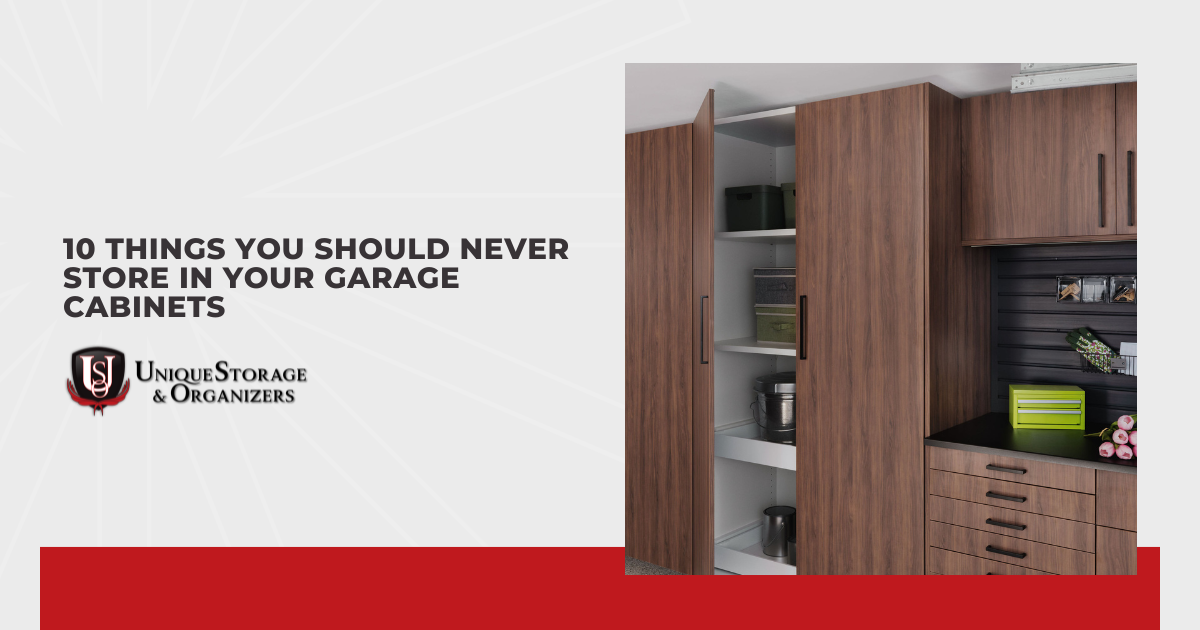
Your garage tends to become the catch-all room in the house, the space where anything without an obvious place ends up. Garage cabinets promise a fix for that, offering doors that close on the clutter and shelves that keep things off the floor. But a garage isn't like the rest of your house. It swings through extreme heat, freezing cold, and humidity that most indoor rooms never see, and some belongings simply can't handle that kind of exposure.
A few categories of items are especially at risk, with consequences that can be minor or downright dangerous. Some products break down chemically once the temperature climbs or drops too far. Others turn into safety hazards without any warning signs until it's too late. I run into this constantly, homeowners treating their cabinets like an indoor closet and finding damaged or ruined items months later.
Avoiding that outcome starts with knowing which items don't belong in your garage cabinets in the first place:
- Propane tanks and fuel containers
- Paint and chemical solvents
- Pet food and birdseed
- Old cardboard boxes
- Photographs and important documents
- Fertilizer and lawn chemicals
- Batteries
- Aerosol cans
- Electronics and small appliances
- Firearms and ammunition
Take a look at each one below to see why it deserves a different spot in your home. Small adjustments today can protect both your belongings and your cabinets for years to come.
Propane Tanks and Fuel Containers
Propane tanks and other fuel containers might feel like natural items for your garage, but a closed cabinet is one of the worst places to keep them. These containers hold pressurized or flammable contents that react poorly to heat, and your garage cabinets can trap warm air for hours after the sun moves off the building. This buildup raises the internal pressure of a tank or can, and in the worst cases, it leads to leaks or ruptures.
Fuel containers also need airflow to stay safe. Gasoline, kerosene, and similar liquids release vapors even when sealed, and those vapors need somewhere to go. A cabinet with tight-fitting doors holds those fumes close instead of letting them dissipate, creating a hazard every time you open the door near a spark source or pilot light.
The safest spot for propane tanks and fuel containers is outside your home entirely, in a shaded, ventilated area away from direct sunlight and ignition sources. Many hardware stores sell dedicated storage cages built for this exact purpose. If a detached shed or covered outdoor spot isn't available, at minimum keep these items far from your garage cabinets and any appliances with pilot lights.
Paint and Chemical Solvents
A garage's temperature swings are especially hard on anything sitting in a can or bottle in your cabinets. Cold winter nights can cause paint to thicken, separate, or freeze, ruining the consistency you need for a smooth finish. Solvents like paint thinner and mineral spirits face a different problem in summer heat, as rising temperatures speed up evaporation and weaken the fumes trapped inside a sealed cabinet.
Those trapped fumes matter more than you might expect. My experience with garage storage is that most flammable-liquid problems trace back to a sealed space with nowhere for vapors to go. Many paints and solvents are flammable, and a closed cabinet only makes that worse. Over months of exposure to heat cycles, containers can also weaken at the seams, leading to slow leaks that damage your shelving and nearby items.
A cool, stable environment protects both the product and your garage cabinets. A basement, utility closet, or climate-controlled storage area keeps paint and solvents usable far longer than a garage ever will. When the garage is your only realistic option, choose an open shelf away from cabinets so fumes can disperse freely.
Pet Food and Birdseed
It's easy to overlook how much scent travels out of your garage cabinets, especially when kibble or birdseed is involved. Mice, rats, and insects pick up on that smell through the smallest gaps around cabinet doors, and once they find a reliable food source, they tend to stick around. What starts as a bag of dog food can turn into the reason a rodent problem takes hold in your garage.
A closed cabinet doesn't offer much protection here either. Rodents can chew through cardboard boxes and thin plastic bags with little effort, and a bag of pet food or birdseed rarely stands up to that kind of pressure. Once a container is breached, you're left with a mess that spreads across shelves and can attract even more pests over the following weeks.
Airtight metal or heavy-duty plastic bins do a much better job of sealing in scent and keeping pests out, and they work best kept away from cabinets that also hold other vulnerable items. Storing pet food closer to where you actually use it, like a mudroom or kitchen pantry, cuts down on the temptation to leave it in the garage at all. Either approach reduces the odds of a rodent problem taking hold in your garage cabinets.
Old Cardboard Boxes
Humidity does more damage in a garage than most people expect, and any cardboard boxes you're storing there take the brunt of it. Moisture in the air causes cardboard to soften, warp, and eventually break down, especially in cabinets without much airflow. Once that happens, whatever you've packed inside is left unprotected and often shows signs of water damage or mold.
Boxes also give pests an easy target, and it's something I look for every time I help someone reorganize a garage. The corrugated layers inside cardboard make ideal nesting material for insects and rodents, so a stack of boxes tucked into your cabinets can go unchecked for months. By the time you notice the damage, it's often spread to whatever else shares that shelf.
Plastic bins with sealed lids hold up far better in a garage environment and keep both moisture and pests out of your belongings. Swapping cardboard for hard-sided containers is one of the simplest upgrades you can make for anything stored long-term in your garage cabinets. It's a small change that protects everything else sharing that space too.
Photographs and Important Documents
Paper doesn't fare well in a space that swings between damp and dry throughout the year. Photographs, birth certificates, tax records, and similar documents can absorb moisture from the air, causing pages to warp, stick together, or develop mold over time. Ink and photo emulsion are especially sensitive, and even a few humid months can leave images faded or discolored.
Temperature extremes add another layer of risk to anything you keep in your garage cabinets. Repeated freezing and thawing weakens paper fibers, making documents brittle and prone to tearing. If a cabinet ever develops a slow leak from a nearby stored liquid, as covered in the paint and solvents section above, paper items have no way to recover once they're wet.
Your important documents and photographs belong in a fireproof safe or a climate-controlled space inside your home, not in the garage at all. Digitizing photos and key paperwork gives you a backup that doesn't depend on physical storage conditions. If some paper items still need a physical home, an interior closet keeps them far safer than anything your garage cabinets can offer.
Fertilizer and Lawn Chemicals
Lawn care products carry their own set of storage problems once they're moved into a garage cabinet. Many fertilizers, herbicides, and pesticides are formulated to stay stable within a specific temperature range, and a garage rarely holds steady enough to meet that. Once these products break down, they can lose effectiveness or, in some cases, become more concentrated and harder to handle safely.
Sealed cabinets also raise the stakes if a bag or bottle leaks. Fertilizer dust and chemical residue can settle into your shelving and cling to nearby items, creating a mess that's tough to clean and potentially harmful to touch. Kids and pets who wander into the garage face real risk if these products sit within easy reach on a low shelf.
A detached shed or a locked, ventilated storage box gives lawn chemicals a safer home away from your living space. Keeping original packaging intact also helps you track expiration dates and mixing instructions, since faded or damaged labels make these products harder to use correctly. The highest shelf and a tightly sealed lid are the next best option if your garage cabinets are all you have to work with.
Batteries
A drawer full of half-used batteries is common in most garages, but heat speeds up their breakdown more than most people realize. Rising temperatures inside a sealed cabinet accelerate the chemical reactions inside a battery, which can cause leaking or swelling. Once a battery starts to leak, the corrosive residue spreads to anything touching it, including the metal or wood surfaces of your cabinets.
Extreme cold creates a different problem for batteries stored in your garage cabinets. They lose charge faster in freezing conditions, and repeated freeze-thaw cycles can crack their casing, which speeds up corrosion even further. By the time you notice, the damage may have already spread to nearby tools or electronics sharing that shelf.
The safest habit is to store batteries in a case rated for battery storage, kept in a stable, moderate-temperature spot rather than directly in your garage cabinets. I always recommend checking batteries every few months for swelling, corrosion, or leakage, since these often go unnoticed until damage has already occurred. Removing batteries from unused devices before long stretches of storage also protects both the batteries and everything around them in your cabinets.
Aerosol Cans
Aerosol cans hold their contents under pressure, and that pressure becomes a liability once temperatures climb inside your sealed cabinets. Heat causes the gas inside to expand, and past a certain point, the can can bulge, leak, or rupture entirely. Spray paint, lubricants, cleaning products, and similar items you might keep on hand all carry this same risk when left in a warm, enclosed space.
A ruptured can does more than waste the product inside. The force of a sudden release can damage your shelving and send propellant and residue across everything stored nearby. Many aerosol formulas are also flammable, which turns a simple storage mistake into a genuine fire hazard if your cabinet sits near any heat source or spark.
Keeping aerosol cans in a cool, shaded spot away from direct sunlight cuts down on this risk considerably. A lower shelf tends to stay cooler than one near the ceiling, so it's worth considering when deciding where these products go in your garage. Rust, dents, and swelling are worth a look every few months, since small problems in your cabinets only get worse if left unchecked.
Electronics and Small Appliances
Circuit boards and sensitive components don't respond well to the swings a garage puts them through. Extreme heat can warp plastic housings and degrade internal wiring, while cold snaps make certain materials brittle and prone to cracking. Small appliances, power tools with electronic components, and gadgets you're storing between uses all face this same exposure inside your cabinets.
Humidity adds a second layer of risk beyond temperature alone. Moisture in the air can corrode circuit boards and connectors, sometimes without any visible sign until the device fails to turn on. Condensation is especially common in garages, since temperatures often shift faster than the air inside a sealed cabinet can adjust.
A climate-controlled space inside your home protects electronics far better than any garage cabinet can. If that's not realistic for every item, sealed containers with silica gel packets help absorb excess moisture and slow down corrosion. Testing devices periodically, rather than assuming they still work after months in storage, catches problems before you need the item and discover it's failed.
Firearms and Ammunition
Firearms and ammunition need conditions that a standard garage cabinet simply doesn't provide. I've found that most people underestimate how much temperature swings can affect the ammunition they’re storing, while humidity poses a serious risk of rust and corrosion on metal components. Many jurisdictions also have specific legal requirements for how you must store these items, and a general-purpose cabinet in your garage rarely meets that standard.
Security matters as much as climate control here. A cabinet with a simple latch or lock offers little protection against theft or unauthorized access, especially if children or visitors spend time in your garage. Most firearm storage mistakes come down to convenience winning out over the extra step of using a dedicated safe.
A locked, fireproof gun safe built specifically for firearms gives you the security and climate stability your garage cabinets can't match. Look for one rated for humidity control if it will sit in an unheated space in your garage for long stretches of the year. You should also store ammunition separately from firearms, both for legal compliance in many areas and as an added layer of protection against accidents.
Conclusion
Clutter has a way of creeping into whatever space allows it, and garage cabinets can absorb a surprising amount before problems start to show. The items you end up losing to damage, hazards, or theft are usually the ones that needed a different environment from the start. Thoughtful use of your cabinets, paired with the right storage elsewhere in your home, keeps both your belongings and your garage safer for years to come. Planning ahead saves you from discovering the damage after it's already done.
